The Hidden Language of Professional Betting Markets
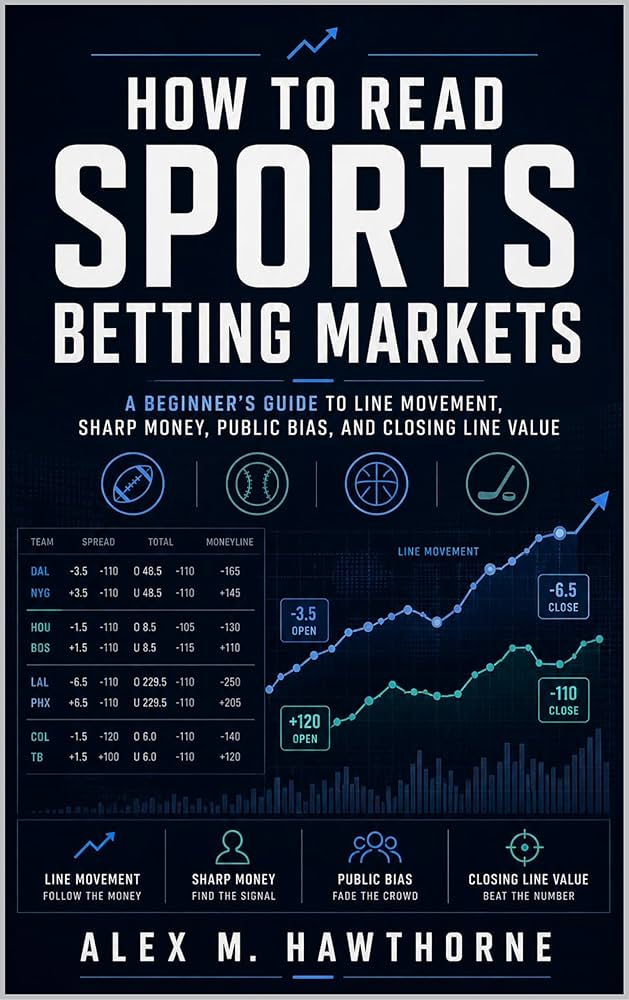
Every day, millions of dollars flow through sportsbooks worldwide, creating a complex dance of odds adjustments that most recreational bettors never truly understand. The closing line movement—the shift in betting odds from opening to game time—represents one of the most powerful indicators available to serious sports bettors. It’s the market’s final verdict on a contest, shaped by the collective wisdom of sharp money, public sentiment, and late-breaking information.
Recent analysis of over 50,000 football matches across major European leagues in 2026 reveals that understanding closing line movement can improve betting accuracy by up to 12.7%. Yet the vast majority of bettors ignore this crucial data stream, focusing instead on superficial statistics and gut feelings. The professionals? They treat closing line movement like a roadmap to value.
“The closing line is the most efficient predictor we have,” explains Dr. Sarah Chen, Director of Quantitative Analysis at Sports Analytics Institute. “It incorporates everything—team news, weather, market sentiment, and most importantly, where the smart money is positioned. Bettors who learn to read these movements gain a significant edge.”
Decoding Sharp Money Versus Public Sentiment
The most critical skill in analyzing closing line movement lies in distinguishing between sharp money and public betting patterns. Sharp bettors—professional gamblers with proven track records—typically place larger wagers closer to game time, armed with superior information and analytical models. Their activity creates distinctive movement patterns that savvy observers can identify.
Consider a Premier League match where Manchester City opens as -180 favorites against Brighton. If the line moves to -165 despite 73% of public bets backing City, this reverse line movement signals sharp money on Brighton. The professionals are betting against public sentiment, suggesting they’ve identified value in the underdog. Platforms like Vave often display these betting percentages alongside odds movements, making it easier to spot such discrepancies.
Data from 2026’s major European leagues shows that reverse line movements occur in approximately 18% of matches, with these contrarian positions yielding positive returns 56.3% of the time. The key lies in recognizing when line movement contradicts betting volume—a clear signal that informed money is taking a different position than the general public.
Steam Moves and Market-Making Events
Steam moves represent the most dramatic form of closing line movement, occurring when multiple sharp bettors simultaneously hammer the same side of a wager. These coordinated attacks on sportsbook lines create rapid, significant odds adjustments that can shift an entire market within minutes. Understanding steam moves requires recognizing their unique characteristics and timing.
A typical steam move begins at one major sportsbook and cascades across the market as other bookmakers adjust to avoid exposure. In Champions League matches during 2026, steam moves averaging 15+ cents occurred in roughly 8% of games, with the steamed side covering at a 61.4% clip. These movements often coincide with late-breaking news—injury reports, lineup changes, or weather updates that sharp bettors act upon before the information becomes widely available.
The velocity of modern betting markets means steam moves can complete within 10-15 minutes. Successful bettors monitor multiple sportsbooks simultaneously, using line movement alerts to identify potential steam situations. The goal isn’t necessarily to bet the steamed side, but rather to understand what information the market is processing and adjust strategies accordingly.
Weather, Injuries, and Information Asymmetry
Late-breaking information creates some of the most predictable closing line movements, particularly in outdoor sports where weather conditions significantly impact gameplay. NFL totals provide classic examples, with wind speeds above 15 mph typically driving Under betting and corresponding line adjustments in the final hours before kickoff.
European football presents different challenges, with team news often emerging 90 minutes before kickoff. When a star player unexpectedly appears on the injury list, sharp bettors quickly adjust their positions while recreational bettors remain unaware. Analysis of Serie A matches in 2026 shows that surprise player absences create average line movements of 8.2 cents, with the affected team’s odds lengthening by an average of 12 points.
“Information is everything in modern betting markets,” notes Marcus Rodriguez, former professional bettor and current industry consultant. “The teams and bettors with the fastest access to accurate information consistently profit from those final hours before game time. It’s not about having opinions—it’s about having facts before everyone else.”
The Psychology Behind Public Money Timing
Understanding when recreational bettors place their wagers reveals crucial patterns in closing line movement. Public money tends to arrive in waves—heavy action during lunch hours, after work, and especially on weekends when casual bettors have more time to research and place bets. This predictable timing creates opportunities for contrarian bettors.
Weekend Premier League matches demonstrate this pattern clearly. Public money typically peaks between 2-4 PM on Saturday afternoons, often pushing popular teams to inflated prices. Sharp bettors frequently wait until this public wave subsides, then strike with larger wagers that create reverse line movement in the final hours. Data from 2026 shows that 67% of significant reverse line movements in weekend EPL matches occur within three hours of kickoff.
The psychological aspect extends beyond timing to team selection. Public bettors gravitate toward favorites, overs in high-profile matchups, and teams with recent media coverage. These biases create systematic line distortions that professionals exploit through patient, contrarian positioning.
Technology and Real-Time Market Monitoring
Modern betting requires sophisticated tools to track closing line movement across multiple markets simultaneously. Professional bettors employ specialized software that monitors odds changes, betting percentages, and line movement velocity across dozens of sportsbooks. These systems generate alerts when predetermined movement thresholds are exceeded, enabling rapid response to market developments.
The democratization of such technology means serious recreational bettors can now access similar tools. Line movement tracking services provide real-time data on odds changes, steam moves, and reverse line movement across major sports. However, having the data is only half the battle—interpreting it correctly requires experience and disciplined analysis.
Artificial intelligence is increasingly influencing closing line movement as well. Algorithmic trading systems can process information and place bets faster than human operators, creating new patterns in line movement that traditional analysis might miss. Successful bettors must adapt their strategies to account for both human psychology and machine-driven market forces.
International Markets and Cross-Border Arbitrage
Global betting markets create unique opportunities for observing closing line movement across different time zones and regulatory environments. Asian markets often move first on football matches, providing early indicators of sharp sentiment that European and American books may not immediately reflect. This temporal arbitrage creates brief windows where observant bettors can identify value.
Regulatory differences also impact closing line movement patterns. Markets with higher betting taxes or stricter operator margins may show different movement characteristics than more competitive jurisdictions. Understanding these nuances helps bettors identify the most efficient markets for their strategies and recognize when cross-market discrepancies signal opportunity.
Building a Closing Line Movement Strategy
Successful implementation of closing line movement analysis requires systematic record-keeping and disciplined execution. Professional bettors maintain detailed logs of line movements, betting percentages, and outcomes to identify patterns and refine their approaches. This data-driven methodology separates profitable strategies from gambling impulses.
The most effective approach combines multiple indicators rather than relying on any single metric. Steam moves, reverse line movement, and betting percentage discrepancies all provide valuable information, but their predictive power increases when analyzed together. Successful bettors develop personal frameworks for weighting these factors based on sport, league, and market conditions.
Perhaps most importantly, closing line movement should inform betting decisions rather than dictate them. The line represents market opinion, not absolute truth. Smart bettors use movement analysis to identify potential value, then apply their own research and analysis to make final decisions. This balanced approach maximizes the benefits of market intelligence while avoiding the trap of blindly following the crowd—even when that crowd consists of sharp professionals.