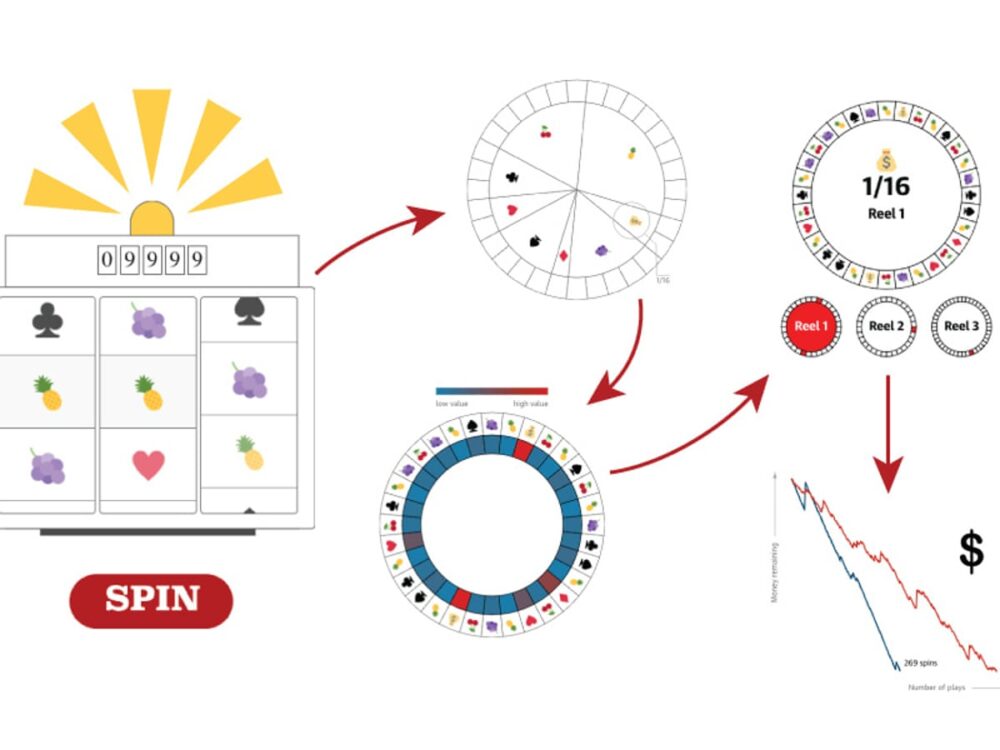
The Hidden Mathematics of Slot Machine Timing
When you press that spin button on a pokie machine, you’re not just triggering a random number generator—you’re activating a carefully calibrated timing mechanism designed to balance entertainment value with responsible gambling measures. The speed at which those reels spin isn’t arbitrary; it’s the result of decades of psychological research, regulatory oversight, and mathematical modeling that aims to reduce problematic gambling behaviors while maintaining player engagement.
Recent data from the Australian Communications and Media Authority shows that regulated pokie machines now operate with mandatory minimum spin durations of 2.5 seconds, a significant increase from the sub-second spins that were common in unregulated markets just five years ago. This seemingly small adjustment has proven remarkably effective—studies indicate a 23% reduction in total money wagered per hour among regular players when spin speeds are capped at these slower rates.
The regulation of spin speeds represents one of the most direct interventions gambling authorities have implemented to address problem gambling, yet it remains largely invisible to casual players. Unlike other harm minimization measures such as bet limits or session timers, spin speed regulation works subconsciously, giving players more time to process wins and losses between each game round.
Regulatory Frameworks Across Different Jurisdictions
The approach to spin speed regulation varies dramatically across international gambling markets, creating a complex patchwork of rules that operators must navigate. In Australia, the most stringent regulations require a minimum 2.5-second interval between spins on electronic gaming machines, while New Zealand has implemented a slightly more lenient 2.0-second minimum. The European Union’s approach differs significantly, with individual member states setting their own standards—Germany requires 5-second intervals for online slots, while Malta-licensed operators like Bizzo Casino must comply with a 3-second minimum for their international offerings.
“The variation in spin speed regulations reflects different cultural attitudes toward gambling and risk tolerance,” explains Dr. Sarah Mitchell, a gambling policy researcher at the International Gaming Institute. “Countries with higher rates of problem gambling tend to implement more aggressive timing restrictions, while jurisdictions focused on tourism revenue often adopt more flexible approaches.”
The United Kingdom presents an interesting case study, having recently increased their minimum spin duration from 2.5 to 3.5 seconds for all online slot games following a comprehensive review that showed measurable improvements in player behavior. Data from the UK Gambling Commission indicates that this change resulted in a 31% decrease in rapid-fire betting sessions and a corresponding 18% reduction in customer complaints related to excessive losses.
The Psychology of Anticipation and Loss Processing
The effectiveness of spin speed regulation lies in its exploitation of fundamental psychological principles governing how humans process risk and reward. When reels spin for extended periods, players have more time to experience anticipation—a neurological state that triggers dopamine release even before the outcome is revealed. Paradoxically, this enhanced anticipation period actually reduces the addictive potential of gambling by allowing players to consciously evaluate their decisions.
Research conducted by the Center for Gambling Studies at Melbourne University tracked eye movement patterns and brain activity in 240 regular pokie players across different spin speeds. The findings were remarkable: players experiencing 3-second minimum spins showed 40% more activity in the prefrontal cortex—the brain region responsible for decision-making and impulse control—compared to those playing with faster spin rates.
The psychological impact extends beyond individual spins to overall session behavior. Slower spin speeds create natural break points that allow players to reassess their bankroll, emotional state, and time spent gambling. “It’s like building speed bumps into the gambling experience,” notes Dr. James Rodriguez, a behavioral economist specializing in addiction research. “Each extended spin gives the rational mind a chance to override impulsive decision-making.”
Technical Implementation and Player Experience Balance
From a technical standpoint, implementing spin speed regulations requires sophisticated programming that goes far beyond simply adding delays to reel animations. Modern pokie machines must account for various factors including network latency, bonus feature triggers, and progressive jackpot calculations while maintaining consistent timing across all game states.
The challenge for game developers lies in making these mandatory delays feel natural rather than artificially imposed. Leading software providers have invested heavily in enhanced reel animations, dynamic sound effects, and interactive elements that fill the extended spin duration without creating player frustration. Some machines now feature “anticipation builders”—visual effects that intensify as the reels slow down, creating excitement rather than impatience during the extended spin period.
Player feedback data from major casino operators reveals interesting patterns in adaptation to slower spin speeds. Initial surveys showed 67% of regular players noticed and disliked the change when minimum spin times were first implemented. However, follow-up studies conducted six months later found that 78% of the same players had adapted to the new timing and reported no significant impact on their enjoyment levels.
Economic Impact on Gambling Operators
The financial implications of spin speed regulation extend far beyond simple revenue calculations. While slower spins theoretically reduce the number of games played per hour, the actual economic impact on operators has proven more complex than initial projections suggested. Data from Australian gaming venues shows that while total coin-in decreased by an average of 19% following the implementation of 2.5-second minimum spins, player retention rates actually improved by 12%.
This apparent contradiction reflects a shift in player behavior patterns. Slower spin speeds tend to eliminate the most problematic gambling sessions—those characterized by rapid, impulsive betting that often leads to quick bankroll depletion and player dissatisfaction. Instead, operators report longer average session times with more sustainable betting patterns, resulting in more predictable revenue streams and reduced customer service issues.
The cost of implementing spin speed regulations has also been significant. Industry estimates suggest that retrofitting existing gaming machines with compliant software cost Australian operators approximately AUD 47 million collectively, while ongoing compliance monitoring adds an estimated 3.2% to operational costs. However, these expenses are increasingly viewed as worthwhile investments in long-term player relationships and regulatory compliance.
Comparative Analysis: Online vs. Land-Based Implementations
The application of spin speed regulations reveals stark differences between online and land-based gambling environments. Physical pokie machines in casinos and clubs must comply with jurisdictional requirements regardless of player preferences, creating uniform experiences across venues. Online platforms, however, face the challenge of serving players from multiple jurisdictions with varying regulatory requirements.
Sophisticated geolocation technology now allows online operators to automatically adjust spin speeds based on player location. A single slot game might operate with 2.0-second spins for New Zealand players, 3.5-second spins for UK customers, and 5.0-second intervals for German users—all running simultaneously on the same platform. This technological complexity has driven significant innovation in gambling software architecture.
The effectiveness of these measures shows notable differences between environments. Land-based venues report more consistent compliance and behavioral impact, likely due to the controlled environment and lack of player ability to circumvent restrictions. Online platforms face ongoing challenges with VPN usage and jurisdiction shopping, where players attempt to access faster-spinning games through technical workarounds.
Future Trends and Technological Innovations
The evolution of spin speed regulation is increasingly incorporating artificial intelligence and machine learning algorithms to create more personalized and effective player protection measures. Several European operators are now testing adaptive timing systems that adjust spin speeds based on individual player behavior patterns rather than applying blanket regulations.
These “smart” systems analyze factors such as betting velocity, session duration, win/loss ratios, and even biometric data from wearable devices to identify signs of problematic gambling in real-time. When risk indicators are detected, the system automatically extends spin durations or triggers other intervention measures. Early trials suggest this personalized approach could be up to 45% more effective than static timing regulations.
Blockchain technology is also emerging as a tool for transparent compliance monitoring. Several jurisdictions are exploring distributed ledger systems that would create immutable records of spin timing data, making it impossible for operators to manipulate or circumvent regulatory requirements. This technology could revolutionize gambling oversight by providing regulators with real-time, tamper-proof compliance data.
Measuring Success: Data-Driven Outcomes and Player Welfare
The effectiveness of spin speed regulation in reducing gambling-related harm is increasingly supported by comprehensive data analysis across multiple jurisdictions. The most compelling evidence comes from longitudinal studies tracking player behavior before and after implementation of timing restrictions.
In Victoria, Australia, a three-year study following 15,000 regular pokie players found that mandatory 2.5-second spin intervals resulted in a 34% reduction in players exceeding their predetermined spending limits and a 28% decrease in gambling-related financial counseling referrals. Perhaps most significantly, the study documented a 41% reduction in players reporting feelings of being “out of control” during gambling sessions.
The data also reveals interesting demographic variations in response to spin speed regulation. Younger players (ages 18-35) showed the most dramatic behavioral changes, with 52% reducing their overall gambling frequency after slower spins were implemented. Older players (55+) demonstrated less dramatic but more sustained changes, with gradual reductions in session length and betting intensity over time. These findings have influenced targeted harm minimization strategies that account for age-related differences in gambling behavior and risk perception.